There are several ways through which galaxies die, depending with the type of galaxy involved.In the great ocean of the universe, galaxies are the great clusters of stars, gas and dark matter held together and shaped by gravity and the unyielding power of cosmic processes of transformation. Of course, the more majestic spiral, or the sleek elliptical can look like it is immovable, but this is far from the truth.
How are galaxies destroyed?
That is why the x-axis, representing the cosmic partners, is necessary in the cosmic tango.
Picture two gargantuans of the universe, containing billions to trillions of stars each, flying headlong into each other. Galactic interactions and mergers have been ranked as some of the visually arresting phenomena in the entire life evolution of galaxies. If two galaxies are within touching distance, their gravity comes into play and sucks the two together.
The end product is, a cosmic tango for the galaxies laminated through the gravitational forces and distort the shape for these galaxies. Thus stars, gas and dust are ripped from the outer regions and form streamer like features in space – a true testament to the accursed merger. Eventually, their disks are merged, and the galaxies and their stars along with their central supermassive black holes are formed into one larger galaxy.
If such galaxies belong to the smaller galaxy category, then the process is referred to galactic cannibalism. The stars of the smaller galaxy merge with the larger one and the structure and composition of the later are changed. It even defines the look of galaxies and plays a role in the future course of their development, including star formation.
Observations have shown that when two galaxies collide, for the smaller galaxies they get actually absorbed by the larger galaxies such events are literally called galactic mergers or cannibalism. They are accreted into the larger galaxy and their stars change the structural and composition makeup of the big galaxy. It also determines their further development and influence such characteristics as ability to produce stars.
Supermassive Black Holes: Space Culprits
Hidden in the center of the many galaxies there are supermassive black holes which could be millions to billions times the mass of the Sun. In the event that two galaxies merge, the black holes found at the core of each galaxy can also merge or go through a sort of waltz. When the galaxies are brought together, the black holes are the ones that move around each other gravitationally and in the process they release strong waves of energy whose effects are felt in the space-time continuum—a phenomenon observed in space observatories more recently.

These black holes merge at the end and when they do it emits a tremendous amount of energy to the surrounding galaxy. Sometimes, this energy release in the form of a powerful blast, or an active galactic nucleus (AGN), can expel the gas and dust and effectively extinguish star-making processes and rip apart the galaxy’s equilibrium. The galaxy feedback process in AGN, therefore, is very central in determining the growth rates of galaxies, and therefore, formation of stellar populations.
Environmental Influences: It is not conceivable how a Galaxy can be put on the map without having a Neighborhood.
Contrarily to stars that can be presented as a singular and isolated object, galaxies are not Unique and independent but can belong to clusters or groups and the encounter with the other galaxies in the group and the environment influences deeply their destiny. In dense regions of space; like galaxy clusters and groups, galaxies are capable of causing gravitational disturbances that result in stripping away the outer layers of the galaxies, and hence, making them gas-depleted and therefore less capable of making new stars.
Furthermore, galaxies inside the clusters can have high-speed interactions with intercluster medium and/or dark matter subhalos that can distort the galaxies and speed up their evolution. This environment can be quite unfriendly; thus, quickens the aging process of the galaxies, and it may result in their early demise.
The Life and Death of Stars: How Stars are Destroyed
Stars are the celestial powerhouses of our universe, dazzling us with their light and heat. However, like all things in the cosmos, stars have a finite lifespan. Their destruction, or more accurately, their death, is a dramatic and often beautiful process that can take many forms depending on the star's initial mass. This blog delves into the fascinating ways stars meet their end.
The Lifecycle of Stars
To understand how stars are destroyed, we must first comprehend their lifecycle. Stars are born from giant clouds of gas and dust called nebulae. Under the influence of gravity, these clouds collapse, and as the material condenses, it heats up, eventually igniting nuclear fusion in the core. This marks the birth of a star. Stars spend the majority of their lives fusing hydrogen into helium in their cores, a process that releases an enormous amount of energy.
Low-Mass Stars: Gentle Departures
Low-mass stars, like our Sun, have relatively tranquil deaths. After billions of years of hydrogen fusion, the star exhausts its hydrogen supply. Without the outward pressure from fusion, gravity causes the core to contract and heat up. This increase in temperature allows the star to fuse helium into heavier elements like carbon and oxygen.
As the core contracts, the outer layers of the star expand, and the star enters the red giant phase. Eventually, the outer layers are expelled, forming a beautiful shell of ionized gas known as a planetary nebula. What remains is the core, which cools and contracts into a white dwarf. Over billions of years, this white dwarf will gradually cool and fade into a black dwarf, a theoretical endpoint as the universe isn’t old enough for any black dwarfs to exist yet.
High-Mass Stars: Spectacular Endings
High-mass stars have much shorter and more tumultuous lives. They burn through their nuclear fuel at an astonishing rate, lasting only millions of years compared to the billions of years for low-mass stars. Once these stars exhaust their hydrogen, they undergo a series of increasingly heavy element fusions, culminating in the production of iron.
Iron is the death knell for massive stars because fusing iron consumes energy rather than releasing it. With no energy to counteract the force of gravity, the core collapses in a fraction of a second, leading to a catastrophic event known as a supernova. This explosion is so powerful that it outshines entire galaxies for a brief period and can be observed across the universe.
The Fate of the Core: Neutron Stars and Black Holes
The aftermath of a supernova depends on the mass of the remaining core. If the core is between 1.4 and 3 times the mass of the Sun, it compresses into an incredibly dense object known as a neutron star. Neutron stars are composed almost entirely of neutrons and have densities so extreme that a sugar-cube-sized amount of neutron-star material would weigh about a billion tons on Earth.
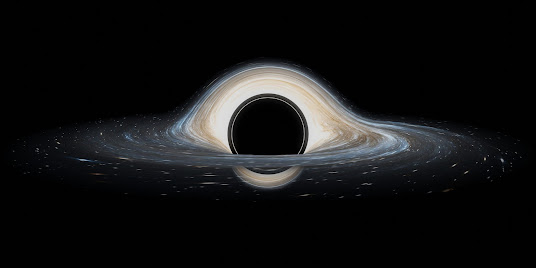
If the core’s mass exceeds about three solar masses, gravity overwhelms all other forces, and the core collapses into a black hole, an object with a gravitational pull so strong that not even light can escape. Black holes represent the ultimate destruction in the universe, warping spacetime itself.
Exotic Endings: Gamma-Ray Bursts and Magnetars
Some high-mass stars can end their lives in even more exotic ways. Gamma-ray bursts (GRBs) are among the most energetic events in the universe and are believed to occur when massive stars collapse into black holes. During this process, intense beams of gamma rays are emitted, which can be detected across vast cosmic distances.
Another exotic outcome is the formation of magnetars, a type of neutron star with an exceptionally strong magnetic field. Magnetars can produce extraordinary bursts of X-rays and gamma rays, significantly impacting their surroundings.
Stellar Cannibalism: A Violent Demise
Stars in binary or multiple-star systems can experience a violent death through a process known as stellar cannibalism. In these systems, stars can transfer mass to one another, dramatically altering their evolution. For example, a white dwarf in a binary system can accrete material from its companion star. If the white dwarf accumulates enough mass to exceed the Chandrasekhar limit (about 1.4 solar masses), it can trigger a Type Ia supernova, a thermonuclear explosion that completely destroys the white dwarf.
The Role of Human Observation
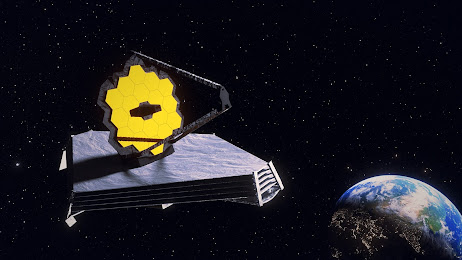
Human observation has played a crucial role in understanding how stars are destroyed. Telescopes and observatories on Earth and in space, such as the Hubble Space Telescope and the Chandra X-ray Observatory, have provided invaluable data on supernovae, neutron stars, and black holes. Advanced computer simulations also allow scientists to model the complex processes leading to the death of stars, giving us a clearer picture of these cosmic events.
The Cycle of Cosmic Life
The destruction of stars is a natural and essential part of the cosmic cycle. The remnants of dead stars, such as neutron stars, black holes, and the elements dispersed in supernova explosions, play crucial roles in the formation of new stars and planets. Elements heavier than hydrogen and helium, which are essential for life, are forged in the hearts of dying stars and spread throughout the universe, seeding the next generation of stars and planetary systems.
In essence, the death of stars is not just an end but a new beginning, contributing to the ongoing evolution of the cosmos. The dramatic and varied ways in which stars meet their end continue to captivate astronomers and the general public alike, reminding us of the dynamic and ever-changing nature of our universe.



Comments
Post a Comment