What Are Radio Galaxies?
Indeed distances in space are very large and the galaxies that are distributed throughout the universe are quite diverse in terms of their physical characteristics. Of all these wonders of the universe, radio galaxies are even more special because they emit radio waves. Unlike most galaxies which are viewed by the optics, radio galaxies are active emitting most of their energy in the radio region of the electromagnetic spectrum and this makes them very interesting for astronomers. This blog looks at the possibility, discovery, and importance of radio galaxies in the universe.
What Are Radio Galaxies?

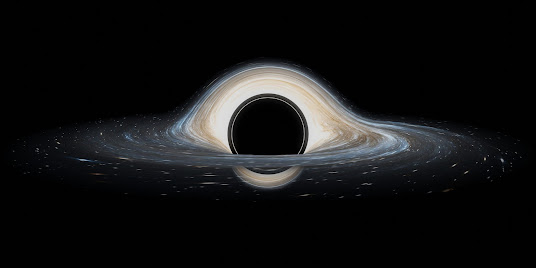
In plain English radio galaxies are a type of active galaxies that produce a lot of radio waves. These emissions are frequently produced in the galaxy core and it is believed that supermassive black hole exists there. The black hole has a mass of between millions to billions of the Sun and is enclosed by an accretion disk comprised of gas and dust. Thus, while the matter from the accretion disk falls into the black hole, the matter releases energy in forms of electromagnetic radiation inclusive of radio.
The most prominent feature of an RG is their intense radio waves, which is a beam of charged particles moving at nearly the speed of light. That can range for millions of light-years and can go much further than the visible parts of the galaxy. They influence large lobes of radio emission and these are the formations that can be seen by radio telescope.
Discovery and Observation
So, it is about radio galaxies it is necessary to note that they were discovered back in the early of the twentieth century tied to the beginning of radio astronomy. The history of radio astronomy began in 1933 when Karl Jansky, an American engineer, became aware of emission from Milky Way in the radio frequency. Astronomers were later able to physically map the sky in radio wave length then they discovered a lot of radio sources.
The first-discovered extra galactic radio source was cygnus A discovered in late 1950’s. Cygnus A is perhaps one of the brightest point sources in the sky and thus has been used as the prototype of radio galaxies. Its structure was found to be double lobed with a dense nucleus and extended radio jets; it has helped greatly in understanding the processes of generation of radio waves.
This paper seeks to elucidate the anatomy of Radio Galaxies.
Radio galaxies are classified into two main categories based on their radio morphology: This can be divided into sub-classes that include: FR I and FR II radio galaxies.

Fanaroff-Riley Type I (FR I)
Of these, the radio galaxies show outflows in the form of jets that gradually dim and widen as they get farther from the nucleus. Radio emission intensity is highest at the nucleus, lessening with the radius of the NLR .The FR I galaxies are usually related to the less powerful radio jets and usually are located in the cluster of galaxies. An example of an FR I galaxy is M87 which is in Virgo cluster.
Fanaroff-Riley Type II (FR II)
This type of galaxy has bipolar or bi-polar jets that are well collimated and remain so for extended distances with the jets remaining bright and thin. Mainly, the radio emission is simply due to the contract at the load or farther away from the hind region known as the core. These galaxies are related with powerful jets and tend to reside in regions with low galaxy density. FR II galaxies are the radio galaxies and Cygnus A is a well known example of FR II galaxy.
Contribution of Supermassive Black Holes

All the radio galaxies are embedded with supermassive black holes at their nucleus. The interaction between the black hole and environment which is illustrated here is effective in producing the spectacular events associated with radio galaxies. Thus, as matter falls into a black hole, it creates an accretion disk; due to gravitational and frictional forces, this material gets extremely hot. This process transform gravitational energy into electromagnetic energy.
Sometimes the black hole pulls the matter from the disk into its own plane, sometimes it rotates the disk material to relativistic velocities and shoots them into space jets. These jets push out through the galaxy and even far beyond the galaxy into intergalactic space. This paper looks into the importance of Radio Galaxies Radio galaxies are not more or less cosmic oddities; rather they form an important part of the study of the universe.
Here are some key reasons why they are important:

Probes of the Intergalactic Medium:
The radio jets and lobes of the radio galaxies, work on terminal scenarios and shock fronts to be in contact with the intergalactic medium revealing the density and composition of the universe in-between the galaxies. Exploring the characteristics of radio lobes, scientists can come to the conclusions on the existence of cosmic magnetic fields and the density of dark matter.
Galaxy Evolution:

Thus, radio galaxies provide information on the Galactic evolutionary scenarios, particularly the part that depends on the activity of a quasar. The energy produced by an AGN with hosts depends on the amount of energy it outputs to the host galaxy thus controlling its growth and development.
Cosmic Distance Markers:
Because radio galaxies emit radiation brightly, they can burn through large distances and, thus, are used as unique indicators of the structure of the universe.
Thus, having defined how radio galaxies are distributed across the universe, astronomers can study the development of the cosmic web and galaxy clusters.
High-Energy Astrophysics:

Astronomy is an excellent point of departure because the environments around supermassive black holes in radio-galaxies are sufficiently hostile to test high-energy physics.
Relativistic velocities attained by particles in jets provides information about processes of particle acceleration and the properties of matter in extreme environment .It is worth noting that radio galaxies are truly amazing and fantastic formations, which contribution to the evolution of our views on the universe is beyond measure. Since their discovery in the early dawn of the radio astronomy up to the time of the current research, radio galaxies have remained fascinating due to high power output and their structures. Given that observational methods and ideas will improve in later years the analysis of radio galaxies will undoubtedly provide still more of a greater understanding about the nature of the universe, the role of supermassive black holes, and the dynamic connection between galaxies and their surroundings.

Comments
Post a Comment